

If you’re a business leader today, you’ve likely heard the names: ChatGPT. Stable Diffusion. DALL·E. They’re not just tech buzzwords — they’re signals of a deeper transformation.
Introduction: Decoding the Noise
If you’re a business leader today, you’ve likely heard the names: ChatGPT. Stable Diffusion. DALL·E. They’re not just tech buzzwords, they’re signals of a deeper transformation.
But here’s the challenge: it’s easy to get lost in the jargon.
For many, the world of Generative AI feels like a fast-moving train with no stops, full of promise, yet wrapped in complexity. But once you understand what these models do, and how they differ, the picture becomes clearer. And more empowering.
This blog is not about theory. It’s a field guide, designed to help you move from curiosity to confidence in the world of GenAI.
Text-Based Models: The Architects of Language
Examples: ChatGPT, Google Gemini, Mistral, Claude

ChatGPT
Google Gemini

Mistral AI

Claude
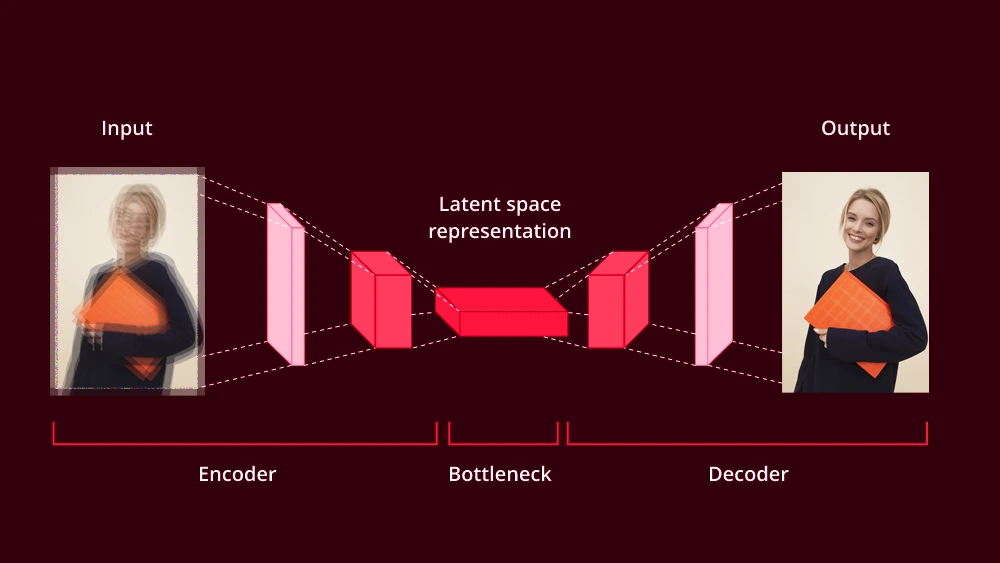
Let’s start with the ones making the most noise — models like ChatGPT, Claude, or Gemini. These are Large Language Models (LLMs), trained on billions of documents, forums, books, and web pages. Their power? Generating human-like text, fast.
In practice, that means they can write emails, sales pitches, blog posts, executive summaries — even product strategy drafts — in seconds.
The best part? These models don’t just answer. They collaborate. If you ask the right question, they’ll help you think, reframe, and refine your ideas. For executives juggling 15 things at once, that’s not automation. That’s amplification.
✅ These are your thinking partners — capable of turning messy thoughts into clear communication.
Image-Based Models: Creativity, Reimagined
Next, we shift from words to visuals.
Stable Diffusion, DALL·E, and Midjourney belong to a family of models that turn text into images. Write a prompt — “a luxury resort lobby inspired by Moroccan architecture and Scandinavian minimalism” — and within seconds, you’ll see it rendered.
Designers use them to explore moodboards. Marketers use them to generate campaign visuals. Product teams use them to imagine packaging or app screens.
The impact? You don’t have to wait for the perfect sketch. You can ideate visually, instantly, at scale.
✅ No designer? No problem. These tools democratize visual creativity for every business function.
Multimodal and Beyond: The Convergence Era
We’re now entering what many call the “multimodal” phase of GenAI — where models don’t just read or write, but also see, listen, and soon, speak and act.
Models like GPT-4 with vision, Runway ML, and Google DeepMind’s Gemini can blend inputs — text, image, video — and generate outputs that feel like early versions of intelligent agents.
Picture a system that sees a product photo, understands your brand tone, and writes a product description aligned with both. Or a tool that reads your whitepaper, summarizes the key takeaways, and generates an investor slide — all in one workflow.
✅ We are moving from task-specific tools to AI teammates that collaborate across mediums.
The Strategic Why: What This Means for Business?

So why does this matter to you — the strategist, the innovator, the leader responsible for results?
Because these tools unlock one thing every business needs: leverage.
GenAI models compress time. They widen the circle of who can create. They challenge the notion that expertise must be manual. And they do this without needing you to write a single line of code.
But here’s the nuance: the tool is not the value. The application is.
It’s not about using ChatGPT. It’s about knowing when to ask it to draft your QBR summary. Or using Stable Diffusion not just to make a nice image, but to accelerate your product launch visual workflow by a week.
Best Practices: How to Navigate This Space

If you’re leading a team, a business unit, or an entire organization — here’s where to begin:
1. Anchor on Use Cases, Not Tools
Start with a business problem. Are you stuck in slow content production? High design costs? Inefficient onboarding? The right model follows the right question.
2. Train Your Teams in Prompting
This isn’t just about AI literacy. Prompting is the new business language. Teach your people to speak clearly to machines, and they’ll unlock capabilities faster than any integration.
3. Build Guardrails, Early
GenAI is powerful — but imperfect. Put in place guidelines for data privacy, ethical use, and brand tone. Don’t just adopt AI. Adopt it with responsibility.
4. Encourage Experiments — But with Intent
Pilot projects can reveal where AI adds real value. But make sure every experiment has a purpose, an owner, and a feedback loop.
Conclusion: The Model Is Just the Beginning
From ChatGPT to Stable Diffusion, these GenAI models are not just tools. They’re signals that the world of work is changing — from static to generative, from reactive to anticipatory, from slow and manual to fast and creative.
The question is no longer can they do it — they can.
The real question is what will you do with them?
✅ The future will belong to leaders who know which models matter, when to use them, and how to align them with purpose.
Whether you’re enhancing how you sell, design, onboard, or lead — the GenAI model landscape is no longer optional territory. It’s core to your digital advantage.